
Introduction
Wood fences, when properly installed and built from high-quality materials, are made to last. But New England winters, especially here in MA & CT, can take a toll on even the strongest of fences if proper measures aren’t taken. Between heavy, wet snow, ice buildup, freezing temps, harsh winds, and persistent moisture,
If you want your fence to make it through the winter without leaning, splitting, rotting, or losing structural strength, now is the time to act. Winter is here, and these are the eight things you should actively be doing throughout the season to keep your fence in great shape and maximize its lifespan.
1. Keep Snow From Building Up Against the Fence
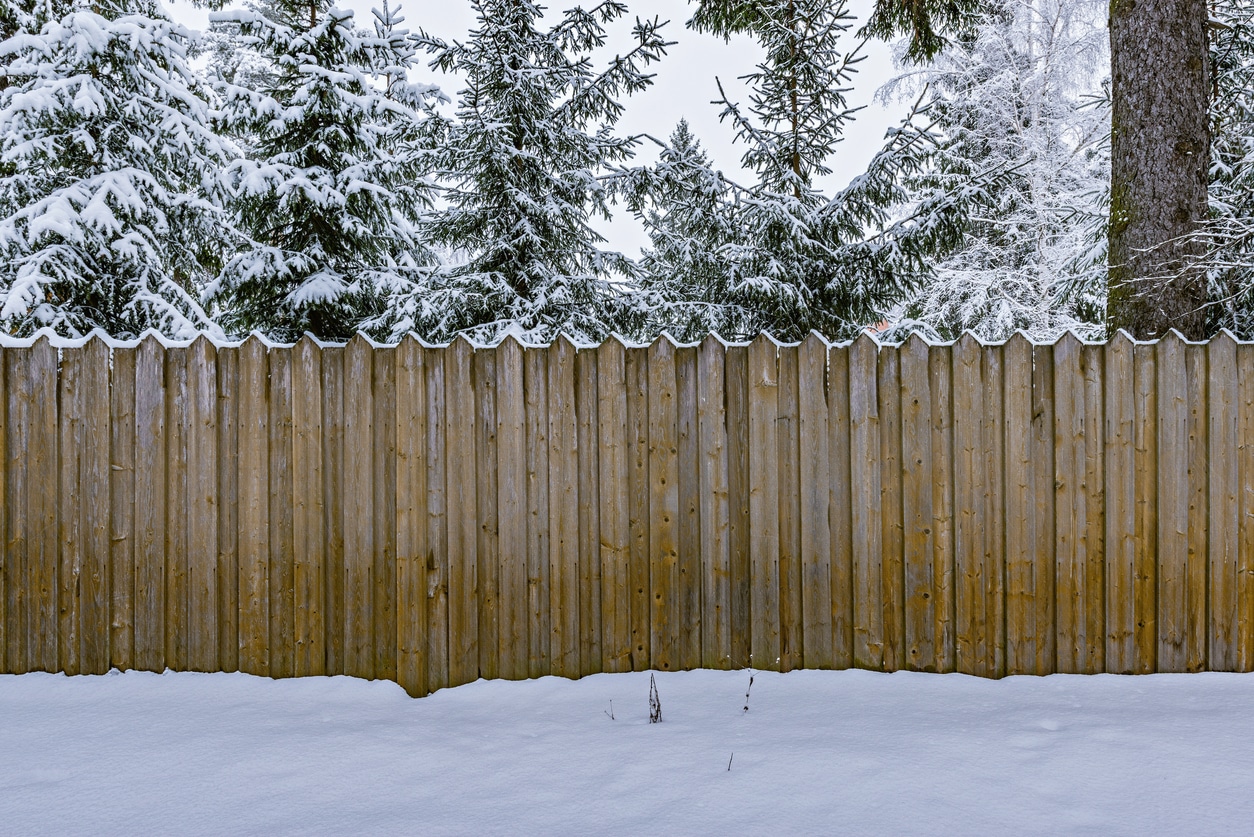
Once snowstorms start rolling in, your fence is surrounded by constant moisture and weight. While it’s normal for snow to sit around the base, large mounds or packed piles can cause serious problems. Wet, heavy snow holds moisture against the boards and posts for long periods of time, which accelerates rot and causes discoloration.
If snow is pushed or drifted up against the fence, use a shovel or broom to gently redistribute it away from the panels. Avoid pressing or banging into the boards, as frozen wood is brittle and easier to crack. The goal isn’t to clear every flake, but to prevent large piles from staying there all season.
2. Watch for Ice Buildup
Freezing rain is one of the biggest threats to a wood fence in New England. A sheet of ice adds intense downward pressure to rails and pickets, and the freeze-thaw cycle can open small cracks that grow into bigger structural issues.
After an ice event, take a few minutes to check your fence. If safe to do so, use a soft broom to loosen thin ice layers. Avoid forceful scraping, kicking, or hitting the fence, as cold wood can splinter easily. In most cases, it’s best to let the sun and natural temperatures do the work; trying to break it off manually often causes more damage than leaving it.
3. Monitor Posts
Fence posts are the backbone of your system, and they’re also the most vulnerable once the ground freezes. When soil stays saturated from melting snow or ice, it places stress on the base of your posts. Add in frost heave (where the soil expands and contracts as it freezes), and posts can shift, lean, or loosen.
Throughout winter, check your fence line for posts that are beginning to lean or wobble. You may notice gaps around the post base or visible separation where the post meets the surrounding soil. Early detection prevents bigger structural problems in the spring.
4. Inspect for Winter Damage After Storms
New England storms are unpredictable. One snowfall might be light and fluffy; the next is wet, heavy, and wind-driven. After major weather, take a slow walk along your fence and look for:
- Cracked or split boards
- Loose nails or hardware
- Sagging rails
- Broken pickets from falling branches
- Leaning sections caused by shifting ground
Catching these issues early helps you avoid expensive repairs when they get worse. Even something small, like a slightly loose rail, can turn into a structural issue if hit by another round of heavy snow or wind.
5. Clear Away Fallen Branches and Heavy Debris
Winter storms often bring strong winds that knock down branches, blow around debris, and send unexpected objects into fences. Even if the damage looks minimal, the impact of heavy branches can loosen boards or shift rails.
As soon as a storm passes, remove branches stuck on or leaning against the fence. Check overhead trees regularly as well: snow-loaded limbs can snap without warning and cause damage to your wooden pickets. Keeping the area around your fence clear will prevent accidental impact damage during the coldest months.
6. Improve Drainage Around the Fence Line
Drainage matters in every season, but it becomes especially important in winter. Melting snow repeatedly saturates the soil around your fence. When water can’t drain properly, your fence sits in moisture that leads to rot, mold, and structural weakening.
If you notice puddling or soggy areas near the fence, add crushed stone or gravel at the base to promote better runoff. You don’t need to overhaul your yard during winter, but small adjustments can keep water from lingering where it shouldn’t.
7. Look for Signs of Wood Rot or Softening
Winter is when rot spreads the fastest because the wood stays wet for long stretches at a time. Rot doesn’t always announce itself immediately, so pay attention to subtle signs:
- Soft or spongy areas on boards
- Discoloration or dark patches
- Flaking, crumbling, or peeling wood
- Mushiness where the fence meets the soil
If you spot early rot, isolate the area by removing any debris or loose wood and monitor it. Some cases can be repaired in spring, but severe rot may require a section replacement. The sooner you know what’s happening, the better prepared you are when it comes time for repair.
8. Schedule A Winter Maintenance Check
Fence viewers are local officials appointed by municipalities or local governments who help resolve fencing and boundary disputes between neighbors. A fence viewer mediates conflict by evaluating the situation, inspecting the properties, and determining whether fences are legally compliant. This involves hearing out both involved parties, examining the condition of any existing fencing, and making tailored recommendations for shared placement, repair, and payment.
Fence viewers in Massachusetts rely on state-specific legislation to guide their findings, specifically Chapter 49, Section 15 of the Massachusetts General Laws. This law governs the maintenance, repair, and location of boundary fences.
Mediators, unlike fence viewers, do not visit the property for a hands-on evaluation. Instead, they take a less technical approach, ideal for situations that are emotionally charged. Mediators can help both parties communicate more clearly and calmly while providing recommendations. Mediators are not like judges in that they do not rule on a mandatory decision.
Quick Pre-Winter Fence Prep Checklist
When possible, it’s always best to get ahead of the cold with a few precautionary measures:
- Inspect and repair any cracked, split, or loose boards.
- Tighten nails, screws, and other hardware.
- Reinforce posts that are leaning or wobbly.
- Trim overhanging branches that could break in a storm.
- Clear leaves and debris from the base of your fence.
- Apply a protective sealant or stain to repel moisture and prevent winter damage.
Let GMH Handle the Hard Part
Prefer to leave winter prep to the pros? GMH offers expert fence maintenance, repairs, and seasonal checkups to keep your wood fence strong all year long. Contact our team today to schedule your winter fence maintenance.