
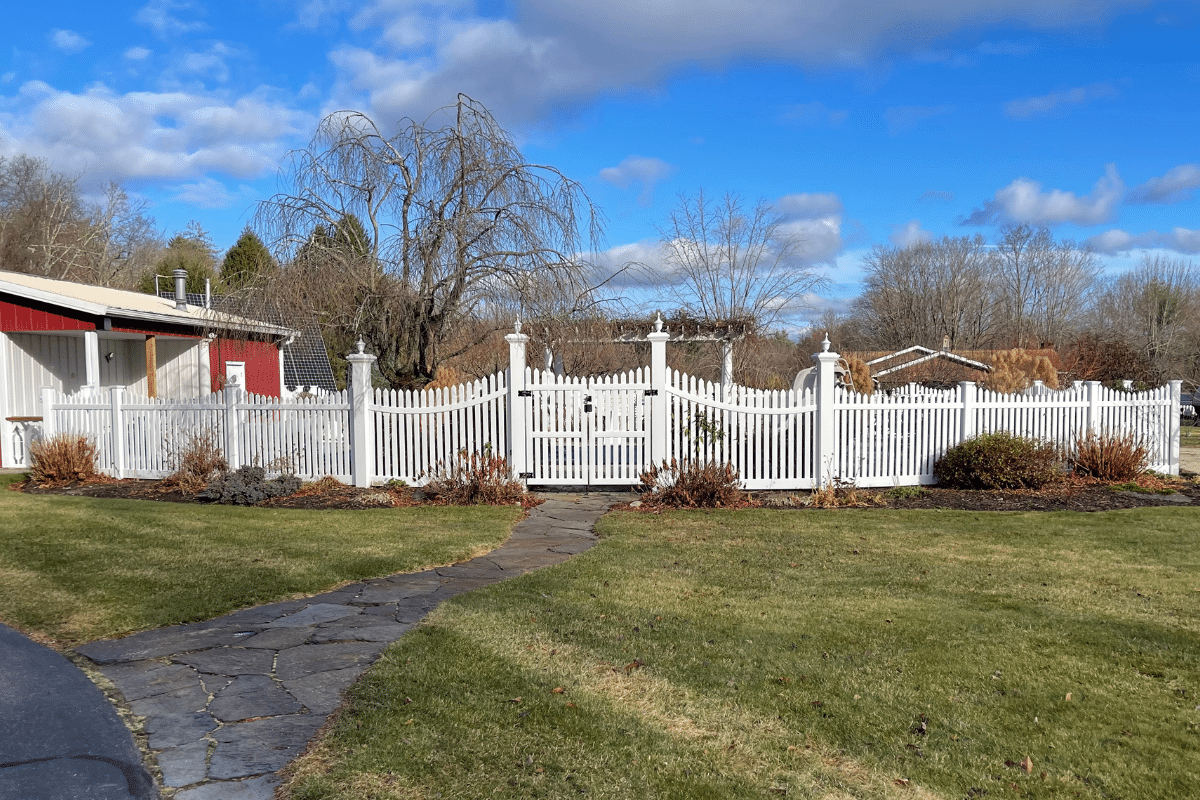
Planning to install a new fence around your Western Massachusetts property? Before starting a project, it's important to understand the local rules governing fence height, placement, permits, and property boundaries. While Massachusetts has state laws addressing certain fencing disputes, individual cities and towns also establish their own zoning requirements. This means the regulations for a fence in East Longmeadow may differ from those in neighboring communities.
Based in East Longmeadow, MA, GMH Fence has more than 40 years of experience serving homeowners throughout Western Massachusetts and Northern Connecticut. Our service area includes East Longmeadow, Longmeadow, Springfield, Wilbraham, West Springfield, Chicopee, and Amherst. Understanding local fencing requirements can help homeowners plan their projects, avoid potential disputes, and ensure their installations comply with applicable regulations.
Understanding Massachusetts Fence Laws and Local Regulations
Massachusetts does not have one universal set of fence height and placement requirements for every residential property. Instead, homeowners must consider applicable state laws along with their municipality's zoning bylaws and building permit requirements.
Local regulations may address several aspects of fence installation, including:
- Maximum fence heights in front, side, and rear yards
- Required setbacks from property lines, sidewalks, and streets
- Restrictions on fences surrounding corner lots
- Building permits and zoning approvals
- Safety requirements for fences surrounding swimming pools
These requirements can vary considerably between communities. Homeowners in East Longmeadow, Longmeadow, Springfield, Wilbraham, West Springfield, Chicopee, and Amherst should review their local regulations before beginning a fence installation. Even neighboring towns may have different requirements for fence placement, height, and permitting.
Can You Build a Privacy Fence Along Your Property Line in Massachusetts?
Installing a privacy fence along your property line is a common way to create separation between neighboring yards. However, homeowners should take a few important considerations into account before deciding where to place a new fence.
Confirm Your Property Boundaries
One of the first steps is determining exactly where your property ends and your neighbor's property begins. Existing landscaping, older fences, and even sidewalks may not accurately reflect the legal property line. Reviewing your property survey can help establish the correct boundaries and prevent disagreements about fence placement.
Understand Local Setback Requirements
Some Massachusetts municipalities allow fences to be installed directly along property lines, while others establish specific setback requirements depending on the fence's height, location, or construction.
For example, East Longmeadow's zoning bylaws require building permits for boundary fences and walls. Other fences generally must be installed at least six inches from the property line. The town also has additional restrictions on fence height and placement near front lot lines.
In Chicopee, fences can generally be installed directly on property lines, with different height and permit requirements depending on their location.
Homeowners in Longmeadow, Springfield, Wilbraham, West Springfield, and Amherst should also check their local zoning requirements before installing a fence near a property boundary. These examples demonstrate why homeowners should not assume the same rules apply throughout Massachusetts.
Consider Massachusetts' Spite Fence Law
Massachusetts General Laws Chapter 49, Section 21 addresses fences that exceed six feet in height and are maliciously erected or maintained to annoy neighboring property owners. Under this law, qualifying structures may be considered a private nuisance, giving affected property owners the right to pursue legal action.
This does not mean that all fences exceeding six feet are prohibited in Massachusetts. The law specifically addresses the height and malicious intent behind the structure.
Homeowners planning a taller privacy fence should understand both their local height restrictions and the circumstances covered by this state law.

Fence Requirements for Corner Lots in Western Massachusetts
Installing a fence on a corner lot can involve additional considerations. Unlike properties that border only one street, corner lots have two street-facing boundaries. Fences placed too close to an intersection can obstruct visibility for drivers, cyclists, and pedestrians.
For this reason, many Massachusetts municipalities establish clear sight requirements that restrict fence heights and placement near intersections.
East Longmeadow, MA
East Longmeadow has specific provisions for corner properties. Its zoning bylaws apply front-yard setback requirements to all lot lines forming the boundaries of a corner lot. This means homeowners may have less flexibility when determining where to install a fence along either street-facing side of their property.
Longmeadow, Springfield, and Wilbraham, MA
Homeowners in Longmeadow, Springfield, and Wilbraham should review their respective zoning bylaws for restrictions on fence placement near streets and intersections. Corner-lot visibility requirements can affect allowable fence heights and the placement of solid fencing near driveways and roadways.
Before installing a fence along either street-facing boundary, check with the local zoning or building department to determine whether additional restrictions apply.
West Springfield, MA
West Springfield has additional restrictions for residential fences, including front-yard height and placement requirements. Homeowners with corner properties should verify how these provisions apply to both street-facing sides of their lots before planning an installation.
Chicopee, MA
Chicopee has specific restrictions for fences and landscaping near street intersections. According to the city's fencing regulations, no fence or vegetation may exceed 3.5 feet above curb grade for 20 feet along the property line in either direction of an intersection. Additional height restrictions apply to fences located between the street and the front building setback.
Amherst, MA
Amherst's zoning bylaws establish clear sight triangle requirements for corner properties. The designated sight triangle extends 25 feet from the point where the street lines intersect. Fences, walls, and landscaping cannot obstruct visibility within this area in a way that jeopardizes pedestrian or vehicle safety.
The town also requires front-yard setback requirements to be considered along both street-facing boundaries of a corner lot.
These local requirements are especially important when planning privacy fencing or other taller installations near driveways and intersections.
Do You Need a Permit to Install a Fence in Western Massachusetts?
Fence permitting requirements are another important consideration when planning a residential installation. Some towns allow certain fences to be installed without a permit, while others require approval for nearly all permanent fencing projects.
Here are a few examples of how requirements differ across Western Massachusetts:
East Longmeadow: The town requires building permits for boundary fences and walls. Additional placement and height restrictions apply depending on the location of the installation.
Longmeadow: Homeowners should consult the town's building and zoning departments to determine which fence installations require permits and whether additional placement restrictions apply.
Springfield: Fence installation requirements are subject to local zoning and building regulations. Homeowners should confirm applicable height restrictions, setbacks, and permit requirements before starting a project.
Wilbraham: Property owners should verify local building permit and zoning requirements, particularly when installing taller fences or placing fencing near property boundaries and roadways.
West Springfield: The town requires a fence permit and/or building permit for permanent man-made fences. Residential fences cannot exceed six feet in height, with additional restrictions for front yards and corner lots.
Chicopee: Fences installed along property lines can generally reach six feet without a permit. Fences up to eight feet require a permit, subject to additional location and height restrictions.
Amherst: Building permits are required for all fences, including temporary construction fences. Agricultural fences meeting the town's definition are an exception.
Because local bylaws and permitting requirements can change, homeowners should confirm current regulations with their town's building or zoning department before scheduling an installation.
What Happens If Your Fence Violates Local Zoning Regulations?
Installing a fence without following applicable zoning requirements can create problems for homeowners. Depending on the violation and local enforcement procedures, a municipality may require the property owner to correct the issue, modify the fence, or remove an installation that does not comply with local regulations.
Fence placement can also lead to disagreements between neighbors, particularly when property boundaries are unclear or a structure extends onto adjoining land.
Taking the time to review local requirements before installation can help prevent these complications. Homeowners should confirm property boundaries, understand applicable setback and height restrictions, and determine whether a building permit is necessary.
Work With an Experienced Western Massachusetts Fence Company
Understanding local fence regulations is an important part of planning a successful installation. From property line considerations to corner-lot restrictions and building permits, the requirements can vary depending on where your property is located.
Based in East Longmeadow, GMH Fence has more than 40 years of experience providing residential and commercial fencing throughout Western Massachusetts and Northern Connecticut. We proudly serve homeowners in East Longmeadow, Longmeadow, Springfield, Wilbraham, West Springfield, Chicopee, Amherst, and surrounding communities.
If you're considering a new fence for your property, contact us to discuss your project and learn more about our installation services.